
High-Quality Precision Power Gear Manufacturing Solutions Suppliers, Quotes
Product Description
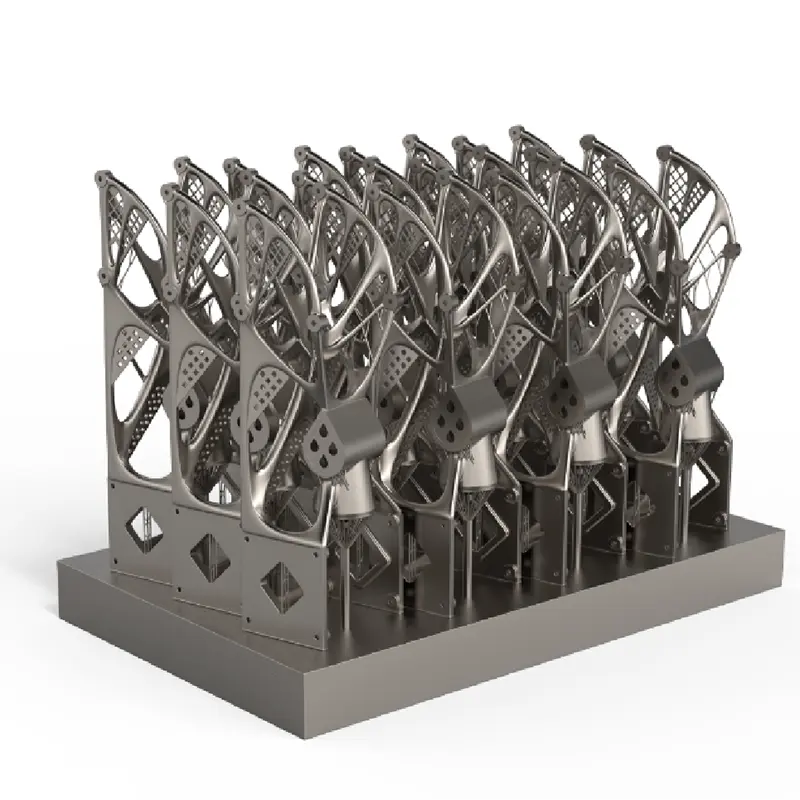
Our AZ91D magnesium components represent a technological leap in unmanned aerial vehicle (UAV) design, combining the exceptional strength-to-weight ratio of selective laser melted (SLM) magnesium with precision CNC machining to deliver mission-critical performance advantages.
- Proprietary argon chamber system with <10ppm oxygen content
- Precision laser parameters optimized for AZ91D powder (20-50μm)
- Controlled pre-heating to 200°C for internal stress reduction
- In-situ real-time monitoring for structural defect detection
- Temperature-controlled machining environment (20±1°C)
- Specialized precision tooling tailored for magnesium alloys
- CNC-tapped threads with certified MIL-SPEC pullout strength
- Final high-durability surface treatments for corrosion protection
- 50% mass reduction vs. aluminum 6061 components
- 30% lighter than carbon fiber equivalents
- Specific strength surpassing standard aerospace aluminum alloys
- Enables extended flight time or increased mission payload capacity
- Engineered internal lattice structures with 80% porosity
- Controlled energy absorption characteristics
- Superior native vibration damping properties
- Integrated EMI shielding capabilities
- Explosion-proof machining enclosures
- Dedicated magnesium fire suppression systems
- Comprehensive dust collection and management systems
- Strict handling procedures per NFPA 484 guidelines
- Full mechanical property validation (ASTM E8/E9)
- Corrosion resistance testing per ASTM B117 standards
- Vibration qualification testing to MIL-STD-810G
- Non-destructive inspection via advanced CT scanning
| Wall Thickness | 0.5 - 3.0 mm (structural elements) |
|---|---|
| Lattice Cell Dimensions | 2 - 5 mm (customizable geometry) |
| Thread Strength | Exceeds MIL-S-8879 specifications |
| Surface Finish | As-printed: Ra 10–15 μm | CNC Machined: Ra 0.8 μm | Precision Surfaces: Ra <0.2 μm |
| Dimensional Accuracy | As-printed: ±0.1 mm | Machined features: ±0.025 mm | Jig grinding: ±0.002 mm |
| Surface Treatments | Passivation, Heat Treatment, Silk-Screen Printing, Laser Engraving |
| Machining Capabilities | 5-Axis Milling (±0.05 mm, Ra 0.4–1.6 μm), EDM / CBN Inserts for Hard Materials, Multi-spindle CNC Turning for Mass Production |
The combination supports agile batch-of-one production runs without expensive tooling modifications. Example application: Patient-specific orthopedic implants engineered with:
- 3D-printed porous scaffolds (accurately matched to bone density CT scans)
- CNC-machined articulation surfaces reaching ultra-smooth tolerances (Ra <0.2 μm)
AZ91D magnesium delivers exceptional strength-to-weight performance, achieving a 50% mass reduction compared to 6061 aluminum and 30% lower weight than carbon fiber. This directly increases payload capability and flight endurance.
We utilize a sealed argon chamber environment maintaining oxygen content below 10 ppm, active 200°C stress relief pre-heating, explosion-proof CNC enclosures, dedicated fire suppression, and strict NFPA 484 compliant protocols.
As-printed SLM components achieve ±0.1 mm accuracy, while precision 5-axis CNC finishing achieves ±0.025 mm, and jig grinding operations reach tolerances as tight as ±0.002 mm with surface roughness down to Ra <0.2 μm.
Components undergo comprehensive ASTM E8/E9 mechanical testing, ASTM B117 salt spray corrosion testing, MIL-STD-810G vibration endurance validation, non-destructive CT scanning, and MIL-SPEC pullout thread inspections.
Yes. The SLM additive process allows engineered internal lattice structures with up to 80% porosity and cell sizes from 2 to 5 mm, delivering high energy absorption, superior damping, and EMI shielding.
By combining direct digital additive manufacturing with multi-spindle and 5-axis CNC machining, we deliver batch-of-one components—such as custom medical implants and prototype UAV parts—without retooling downtime.









