
1 / 1
Buy Custom Metal Solutions-3D Printing and 5-axis CNC Machining Manufacturers, Products
Product Description
Revolutionizing Automotive Performance with Additive Manufacturing
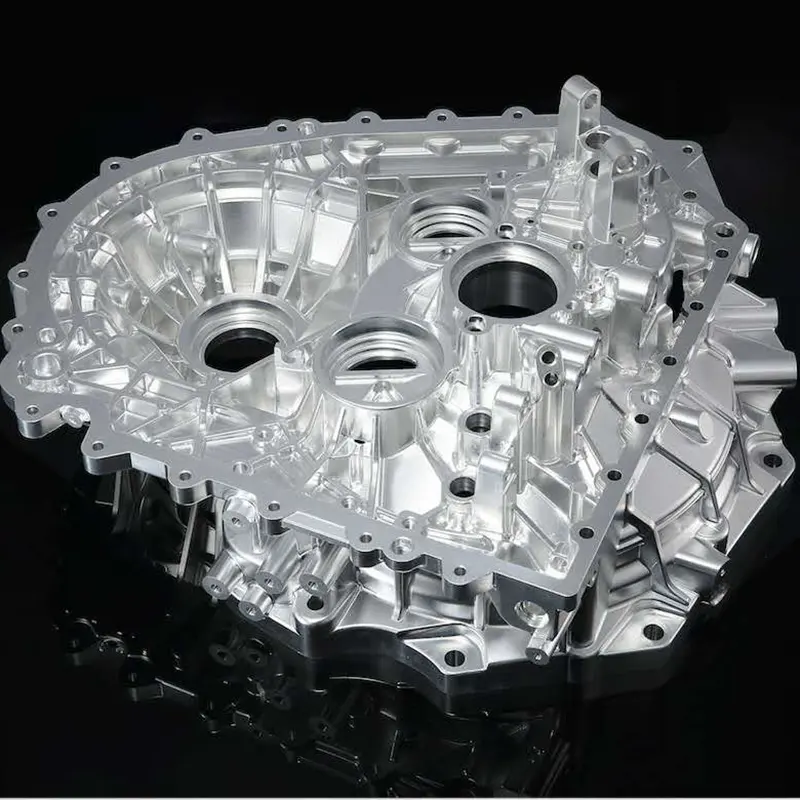
Our Inconel 718 turbocharger housings represent a breakthrough in automotive component manufacturing, combining the design freedom of laser powder bed fusion (LPBF) with the precision of multi-axis CNC machining. This hybrid approach delivers superior performance characteristics that traditional sand casting cannot match.
Material
STAINLESS STEEL / SUS316L / SUS304L / CX / 18Ni300
Surface Treatment & Machining
Phosphating, Zinc/Manganese phosphate for paint adhesion on automotive parts
Machining method: Direct Metal Laser Sintering (DMLS) / Selective Laser Melting (SLM), Electron Beam Melting (EBM)
Manufacturing Capabilities
Cutting-Edge Manufacturing Process: Precision Additive Manufacturing
- Utilizes state-of-the-art LPBF systems with 400W lasers and 30μm layer thickness
- Incorporates advanced scan strategies to optimize grain structure and minimize residual stresses
- Implements in-process monitoring for real-time quality assurance
- Achieves complex internal cooling channels impossible with conventional methods
High-Accuracy CNC Machining
- 5-axis CNC milling centers with 0.001mm positional accuracy
- Specialized tooling for high-temperature superalloys
- Automated probing for dimensional verification
- Achieves <0.03mm runout on critical flange surfaces
Performance Advantages
Material Properties
- Maintains full strength at continuous 700°C operation
- 25% weight reduction versus sand cast equivalents
- Superior thermal fatigue resistance
- Homogeneous microstructure throughout component
Manufacturing Benefits
- 60% faster production time versus traditional methods
- Eliminates need for separate casting cores
- Reduces post-processing requirements
- Enables design optimization through simulation
Advantage
Faster Production of High-Value Parts
Near-net-shape 3D printing reduces CNC machining time by 60–80% versus subtractive-only methods. Example: Inconel 718 turbine blades requiring only 2 hours of 5-axis machining vs. 12+ hours for full billet machining.
Quality Assurance & Technical Specifications
Quality Assurance
- 100% dimensional inspection via CMM
- Surface roughness verification (Ra <0.8μm on combustion faces)
- Non-destructive testing (FPI/RT)
- Material certification to AMS 5662/5663
Technical Specifications
- Wall thickness: 1.5-4mm (optimized via FEA)
- Internal channel diameter: 2-5mm
- Surface finish: As-printed Ra 6-8μm, machined Ra 0.4-0.8μm
- Dimensional tolerance: ±0.05mm (critical features)
Applications
High-performance automotive turbochargers
Motorsport applications
Heavy-duty diesel systems
Marine turbochargers
Frequently Asked Questions
Q: What materials are available for turbocharger housings?
We offer Stainless Steel grades including SUS316L, SUS304L, CX, and 18Ni300, alongside superalloys such as Inconel 718.
Q: How does LPBF combined with 5-axis CNC machining improve component performance?
LPBF allows the integration of complex internal cooling channels and achieves a 25% weight reduction over sand casting, while 5-axis CNC post-machining delivers positional accuracy within 0.001mm and runouts under 0.03mm on critical flange surfaces.
Q: What surface roughness and dimensional tolerances can be achieved?
Critical features achieve dimensional tolerances of ±0.05mm. The as-printed surface finish is Ra 6–8μm, and the post-machined surface achieves Ra 0.4–0.8μm (Ra <0.8μm on combustion faces).
Q: How much production time is saved compared to conventional billet machining?
Near-net-shape 3D printing cuts CNC machining time by 60% to 80%. For instance, Inconel 718 turbine blades require only 2 hours of 5-axis machining compared to over 12 hours for full billet machining.
Q: What quality inspection standards are implemented during production?
Quality assurance includes 100% CMM dimensional inspection, surface roughness checks, non-destructive testing (FPI/RT), and raw material certification according to AMS 5662/5663 standards.
Q: What sectors are these turbocharger housings engineered for?
Primary applications include high-performance automotive turbochargers, motorsport vehicles, heavy-duty diesel engines, and marine turbocharging systems operating up to continuous temperatures of 700°C.









