
1 / 1
High-Quality 3D Metal Printing and CNC Machining Parts for Automotive Suppliers, Products
Product Description
Revolutionizing Radiation-Shielding Components for the Energy Sector
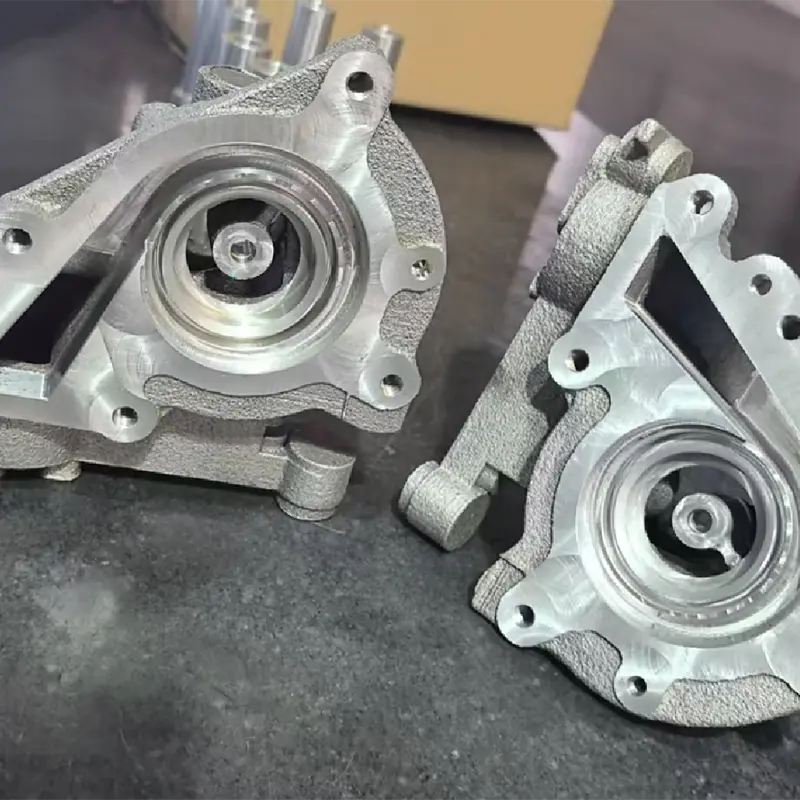
Our pure tantalum (Ta) fuel rod handling tools represent a breakthrough in nuclear component manufacturing, combining cutting-edge electron beam melting (EBM) additive manufacturing with ultra-precision CNC EDM machining to overcome the challenges of working with this refractory metal.
Material Options
COBALT CHROMIUM / CoCrMo / CoCrWMo / Stellite 6
Surface Treatment
Chemical Milling, Black Oxide, Pad Printing, UV Printing, Dot Peen Marking
Machining Methods
Emerging & Niche Technologies, Volumetric 3D Printing, Concrete 3D Printing
Innovative Hybrid Manufacturing Process
Electron Beam Melting (EBM) Production
- Utilizes high-power (3-6kW) electron beam systems in vacuum environment
- Processes ASTM B708 Grade 1 tantalum powder (99.95% purity)
- Achieves near-net-shape geometries with 99.95% density
- Incorporates radiation-optimized internal structures during printing
Precision CNC EDM Finishing
- Wire-EDM with 0.1mm brass wire and <0.005mm kerf control
- 5-axis sinker EDM for complex internal features
- Specialized dielectric fluids for tantalum machining
- Achieves surface finishes down to Ra 0.2μm
Performance Advantages
Material Properties
- Maintains tantalum's exceptional radiation absorption (10.6g/cm³ density)
- Preserves high-temperature stability (melting point 3017°C)
- Excellent corrosion resistance in reactor environments
- Homogeneous microstructure throughout component
Manufacturing Benefits
- 70% material cost savings versus solid plate machining
- 60% reduction in production lead time
- Eliminates traditional fabrication challenges with tantalum
- Enables complex geometries impossible with conventional methods
Quality Assurance & Nuclear Compliance
Process Controls
- 100% density verification via micro-CT scanning
- Dimensional inspection to ±0.01mm tolerances
- Surface roughness measurement on all contact surfaces
- Clean room handling and packaging
Nuclear Standards
- Compliant with ASME BPVC Section III Division 1
- Meets 10 CFR 50 Appendix B requirements
- Conforms to NQA-1 quality assurance standards
- Material traceability to ASTM B708
Technical Specifications
Wall thickness
2-15mm (radiation-optimized)
Surface finish
Ra <0.4μm (grasping surfaces)
Dimensional tolerance
±0.01mm (critical features)
Density
>99.95% of theoretical
Kerf control
<0.005mm (wire-EDM)
Hybrid Material Properties Advantage
3D printing’s fine-grained microstructure is preserved in bulk, while CNC machining creates strain-hardened surfaces. Example: Maraging steel (18Ni300) gears with printed cores (50 HRC) and ground teeth (60 HRC).
Frequently Asked Questions
Q
What makes pure tantalum ideal for nuclear fuel rod handling tools?
Pure tantalum offers extreme radiation absorption capability due to its high density of 10.6 g/cm³, superior corrosion resistance in severe reactor conditions, and exceptional high-temperature stability with a melting point of 3017°C.
Q
How does combining EBM additive manufacturing with CNC EDM reduce costs?
Tantalum is notoriously difficult and expensive to machine from solid billets. Electron Beam Melting (EBM) achieves near-net shapes with 99.95% density, saving up to 70% in raw material costs and shortening lead times by 60%, while CNC EDM provides precision finishing to ±0.01mm tolerances.
Q
Which nuclear regulatory standards and certifications are met?
The manufacturing process complies fully with ASME BPVC Section III Division 1, conforms to NQA-1 quality assurance programs, meets 10 CFR 50 Appendix B requirements, and ensures full material traceability to ASTM B708 standards.
Q
What dimensional tolerances and surface finishes are achievable?
Critical features achieve tight dimensional tolerances within ±0.01mm. Grasping surfaces reach a surface roughness of Ra <0.4μm, with EDM capabilities capable of achieving finishes down to Ra 0.2μm using <0.005mm kerf control.
Q
How is the internal structural integrity of the 3D printed components verified?
Every component undergoes non-destructive 100% density verification via high-resolution micro-CT scanning to guarantee structural homogeneity and ensure density exceeds 99.95% of theoretical values.
Q
Can complex geometries and internal radiation shielding channels be customized?
Yes. The EBM additive process allows internal radiation-optimized structures, variable wall thicknesses (2-15mm), and lightweight lattice features that are impossible to fabricate using conventional subtractive machining.









