
1 / 1
Buy 3D Metal Printing and CNC Secondary Machining Precision Parts Suppliers, Product
Product Description
Material
NIKEL BASE ALLOY/ In 718/In 625 /HX /GH 188
Surface Treatment
Electrochemical Treatments, Electroless Plating, Conversion Coatings, Chromating
Machining method: Multi Jet Fusion (MJF), Digital Light Processing (DLP), Metal 3D Printing Technologies
Description
Precision CNC Machining for Critical Interfaces
5-axis CNC turning and grinding achieve Ra 0.1μm mirror finish on the taper junction, minimizing wear and corrosion.
Tight tolerances (±5um) ensure perfect compatibility with femoral heads and surgical instruments.
Post-process CNC polishing eliminates micro-defects, reducing fretting corrosion risk.
Post-Processing for Enhanced Performance
Stress-relief heat treatment prevents distortion and improves fatigue life (tested to 10 million cycles). Ele-polishing further refines surfaces to Ra <0.05μm, reducing bacterial adhesion risks.
Clinical Benefits
Enhanced Longevity – Porous structures promote stable long-term fixation, reducing revision surgeries.
Reduced Stress Shielding – Gradual stiffness transition prevents bone resorption.
Improved Surgical Outcomes – CNC precision ensures perfect taper lock, minimizing micro-motion.
Faster Recovery – Optimized surface textures accelerate tissue attachment.
Advantage
Weight Reduction Without Sacrificing Strength
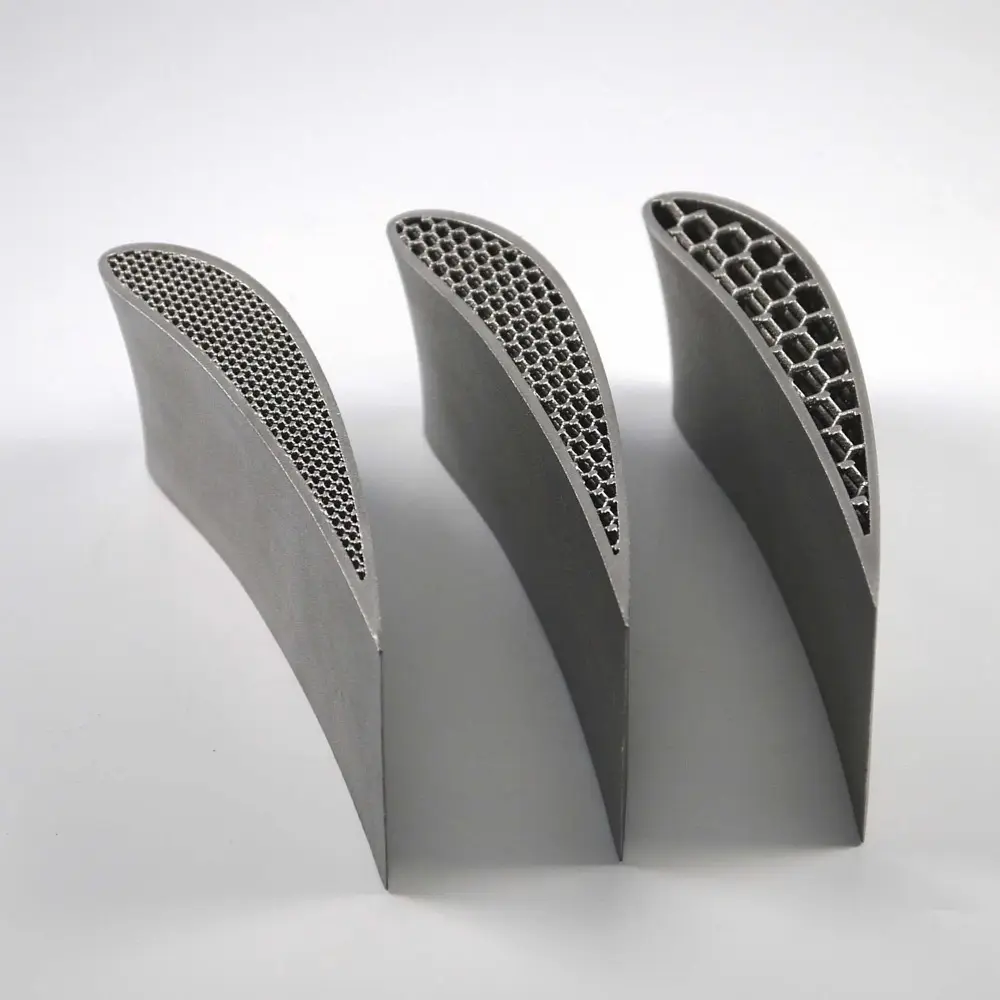
Additive manufacturing allows hollow structures and material-gradient designs, with CNC finishing guaranteeing fatigue-resistant surfaces. Example: Ti6Al4V aircraft components achieving 30–50% weight savings while meeting MIL-STD-2042 load requirements.
Frequently Asked Questions (FAQ)
What materials are supported for these components?
We support high-performance alloys including NIKEL BASE ALLOY, In 718, In 625, HX, GH 188, and Ti6Al4V for demanding engineering and medical applications.
What surface treatment methods and machining technologies are used?
Surface treatments include Electrochemical Treatments, Electroless Plating, Conversion Coatings, and Chromating. Machining methods cover Multi Jet Fusion (MJF), Digital Light Processing (DLP), and advanced Metal 3D Printing Technologies.
What surface finish and tolerance levels can 5-axis CNC machining achieve?
5-axis CNC turning and grinding achieve a Ra 0.1μm mirror finish on critical taper junctions with tight tolerances of ±5um, ensuring compatibility and minimizing wear and fretting corrosion.
How does post-processing improve component performance?
Stress-relief heat treatment prevents distortion and extends fatigue life tested up to 10 million cycles. Electropolishing further refines the surface roughness down to Ra <0.05μm, significantly reducing bacterial adhesion risks.
What clinical benefits do these manufacturing processes offer?
They offer enhanced longevity via porous structures for stable fixation, reduced stress shielding through gradual stiffness transitions, improved surgical outcomes via taper locking precision, and faster recovery through tissue attachment-friendly surface textures.
How does the technology achieve weight reduction without losing strength?
By leveraging additive manufacturing to build hollow structures and material gradients combined with CNC finishing, components such as Ti6Al4V aircraft parts achieve 30–50% weight savings while fully meeting MIL-STD-2042 load requirements.









