
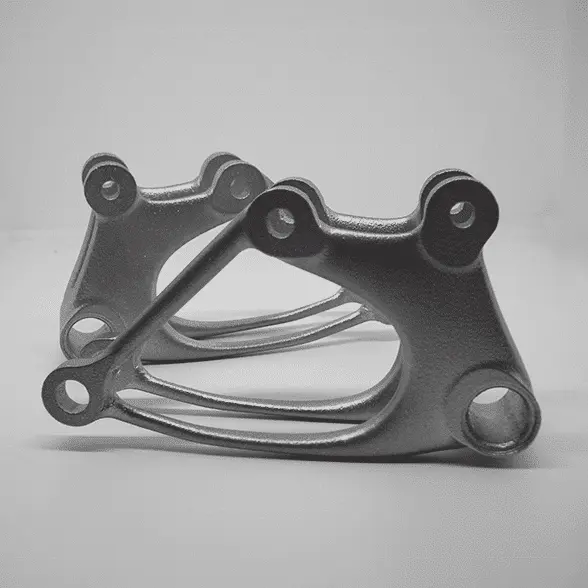
High-Quality Additive Manufacturing 3D-CNC Fabrication Metal Parts Manufacturer, Manufacturers
Product Description
Material & Processing Capabilities
- Coating
- Physical Vapor Deposition (PVD)
- Plasma Spray
- Dip Coating
- E-coating (Electrophoretic Deposition)
- Directed Energy Deposition (DED)
- Binder Jetting (Metal)
- Ceramic & Composite 3D Printing
Innovative Hybrid Manufacturing Process
- Utilizes state-of-the-art laser/powder DED systems with closed-loop thermal control
- Implements advanced deposition strategies to maintain optimal microstructure
- Achieves 99.5% dense Stellite 6 deposits with hardness of 45 HRC
- Enables precise material addition only where needed (0.5-3mm buildup thickness)
- 5-axis CNC grinding centers with 0.1μm positioning accuracy
- Specialized diamond grinding wheels for cobalt alloys
- Automated measurement and compensation systems
- Achieves 0.2μm flatness on sealing surfaces
Performance & Operational Advantages
- Maintains hardness of 45 HRC throughout repair zone
- Excellent corrosion resistance in sour gas environments
- Superior galling resistance compared to base materials
- Homogeneous microstructure with controlled carbide distribution
- 300% longer service life versus new components
- 60% cost savings compared to full replacement
- Maintains original component dimensions and tolerances
- Reduces equipment downtime by 75%
Technical Specifications
| DED Layer Thickness | 0.2 - 0.5 mm |
| Final Surface Finish | Ra 0.1 - 0.2 μm (sealing surfaces) |
| Dimensional Tolerance | ±0.005 mm (critical bores) |
| Flatness | < 0.2 μm (sealing surfaces) |
| Cylindricity | < 0.01 mm (API 6A compliant) |
Quality Assurance
- 100% dimensional verification via CMM
- Surface finish measurement (Ra <0.2μm on sealing faces)
- Hardness testing (Rockwell C scale)
- Non-destructive examination (PT/UT)
- Material certification to ASTM F75
Industrial Applications
- Gate valve seats and wedges
- Ball valve seats
- Choke valve components
- Christmas tree valves
- Pipeline isolation valves
Material Efficiency Advantage
Powder-bed fusion (SLM/DMLS) uses only 10–20% excess material versus CNC machining from solid, which may remove 80% of raw material.
Example: AlSi10Mg automotive parts achieve 70% lower material costs.
Frequently Asked Questions (FAQ)
The process combines Directed Energy Deposition (DED) repair, 5-axis precision CNC grinding finishing, Binder Jetting (Metal), and Ceramic & Composite 3D Printing.
It delivers 300% longer service life compared to new components, 60% cost savings compared to full replacement, reduces equipment downtime by 75%, and maintains original component dimensions and tolerances.
We achieve a surface finish of Ra 0.1-0.2μm and flatness <0.2μm on sealing surfaces, dimensional tolerances of ±0.005mm on critical bores, and cylindricity <0.01mm (API 6A compliant).
Quality control includes 100% CMM dimensional verification, Ra surface measurement (<0.2μm on sealing faces), Rockwell C hardness testing (45 HRC), non-destructive examination (PT/UT), and ASTM F75 certification.
Primary applications include gate valve seats and wedges, ball valve seats, choke valve components, Christmas tree valves, and pipeline isolation valves in severe oil and gas operating environments.
Powder-bed fusion (SLM/DMLS) uses only 10–20% excess material compared to solid CNC machining, which may remove up to 80% of raw material, resulting in up to 70% lower material costs (as seen in AlSi10Mg parts).









