
Cheap 3D Printing & CNC Machining: Cross-Industry Manufacturing Supplier, Pricelist
Product Description
| Material | TIANIUM / TiA14V / Ti6 / A14V ELI / TA1 |
| Surface Treatment | Anodizing, Clear Anodize, Black Anodize, Color Anodize, Bead Blast and Anodize, Glossy Anodize, Matt Anodize, Gold Anodize, Silver Anodize |
| Machining Method | Polymer 3D Printing Technologies, Fused Deposition Modeling (FDM), Stereolithography (SLA), Selective Laser Sintering (SLS), Selective Laser Melting (SLM), 5-Axis CNC Precision Machining |
Optimized Design for Maximum Performance
- Topology-Optimized Lattice Structures: Using Selective Laser Melting (SLM), we create ultra-lightweight internal lattice geometries that reduce weight by 40% compared to conventional machined brackets—without compromising structural integrity.
- Conformal Cooling & Load-Specific Reinforcement: AM enables organic, load-path-optimized designs that are impossible to achieve with subtractive methods, improving stiffness-to-weight ratios by up to 30%.
Precision CNC Finishing for Flight-Critical Reliability
- 5-Axis CNC Machining: After printing, our high-precision 5-axis CNC machines refine all mating surfaces to ±0.025mm tolerance, ensuring perfect fitment with adjacent aircraft assemblies.
- Superior Surface Finish: Critical load-bearing surfaces are machined to Ra 0.4μm or better, reducing friction and wear in high-stress applications.
- Thread Milling for Fatigue Resistance: Bolt holes undergo CNC thread milling to exceed AS9100 fatigue life requirements, with testing validation at operational loads.
Material & Cost Efficiency
- 65% Less Material Waste compared to solid billet machining—conserving aerospace-grade titanium.
- Near-Net-Shape Printing minimizes CNC machining time, lowering costs by 30-50%.
- Powder Reuse: Unused Ti6Al4V powder is recycled for optimal sustainability.
Certified for Aerospace Demands
- Fully compliant with AS9100 & AMS 4999A standards.
- Hot Isostatic Pressing (HIP) ensures 99.9% density, eliminating internal porosity.
Next-Gen Applications
- Commercial & Military Airframes
- Spacecraft Structural Components
- Drone & UAV Load-Bearing Frames
Unmatched Design Freedom + Precision
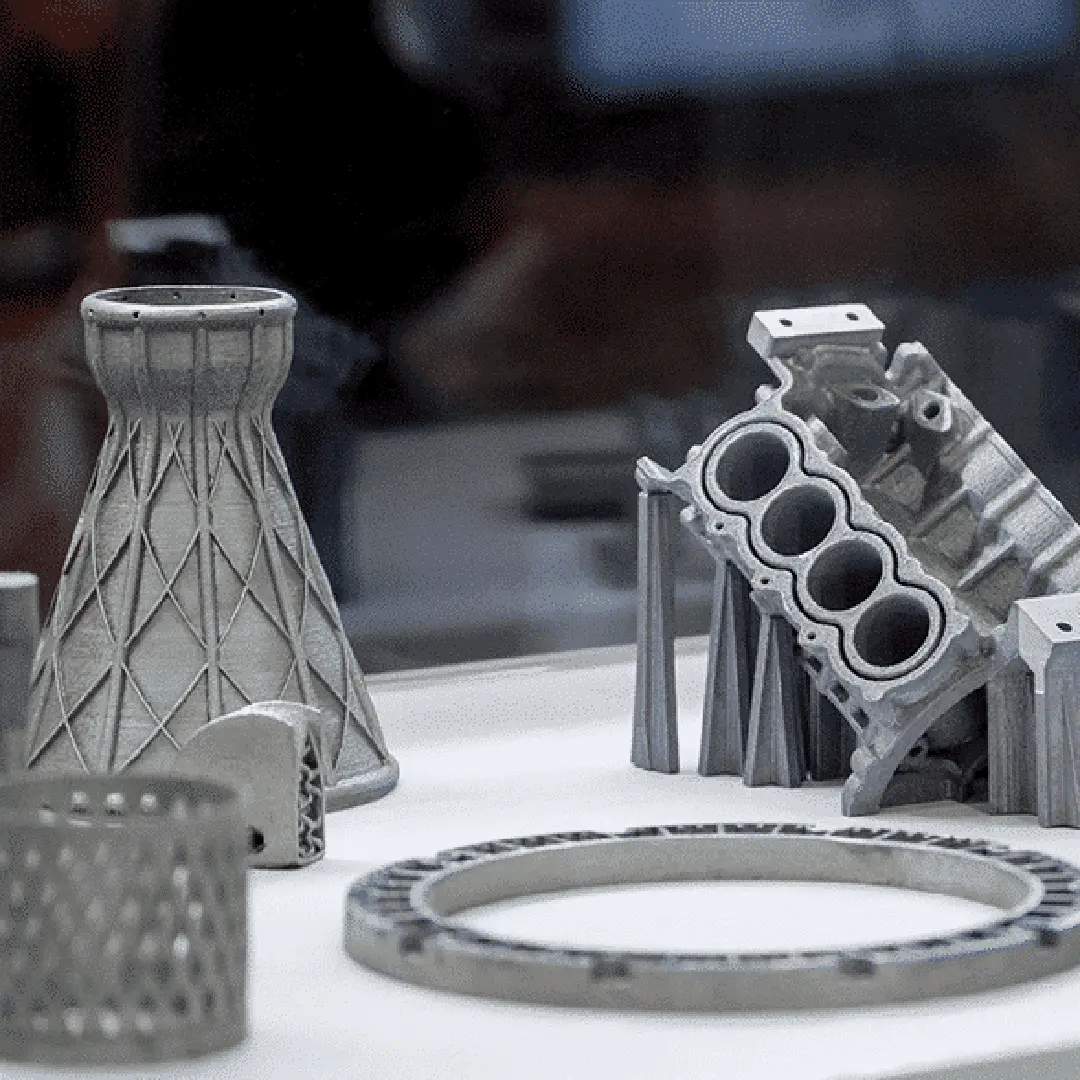
3D printing enables complex internal channels, lattices, and organic shapes impossible to machine from solid, while 5-axis CNC ensures ±0.025mm tolerances on critical interfaces (e.g., mating surfaces, threads). Example: Aerospace brackets with topology-optimized structures and CNC-machined bolt holes.
We support multiple high-grade titanium alloys including Titanium, Ti6Al4V, Ti6Al4V ELI, and TA1, catering to critical aerospace strength-to-weight and fatigue standards.
Our 5-axis CNC machines refine mating surfaces to a tight tolerance of ±0.025mm, with critical load-bearing surfaces machined to Ra 0.4μm or better.
Near-net-shape additive manufacturing generates up to 65% less material waste than solid billet machining, minimizes CNC cycle times, and cuts total production costs by 30% to 50%.
Components undergo Hot Isostatic Pressing (HIP) post-treatment to achieve 99.9% structural density, fully complying with AS9100 and AMS 4999A aerospace requirements.
Components reach an Ultimate Tensile Strength (UTS) of 1,100 MPa, a Yield Strength of 950 MPa, and an Elongation rate of 10-12%, matching wrought Ti6Al4V standards.
Available treatments include clear, black, color, gold, and silver anodizing, along with bead blast anodizing, glossy anodize, and matte finishes.









