
Printing Machining brings together print production, precision machining, and the inspection processes that keep finished parts consistent. This guide to China’s top 10 manufacturers is intended to help buyers compare capabilities, not simply collect company names. A useful comparison looks at materials, tolerances, equipment, finishing options, quality checks, and communication during sampling. Those details matter when a component must fit a press, finishing line, or custom production setup.
The work can be easy to underestimate. A small burr, uneven surface, or poorly controlled dimension can disrupt an otherwise careful assembly. Not glamorous. Still important. Printing historian and educator Frank Romano’s work offers a useful industry principle: “Strong print production depends on understanding the whole process, from preparation through the finished result.” This is an editorial paraphrase, not a verbatim quotation. It reflects why machining suppliers should be assessed alongside their print-related experience and process controls.
The manufacturers in this overview may serve different needs, from short-run prototypes to repeat production. Their strengths should be checked against current specifications, sample parts, and documented inspection practices. A polished website is not proof of consistent output. Ask how a supplier handles revisions, material changes, and defects before committing to a schedule. Use the list as a starting point, then verify each company’s fit for your project. Even a strong supplier can be the wrong choice for a specific part.
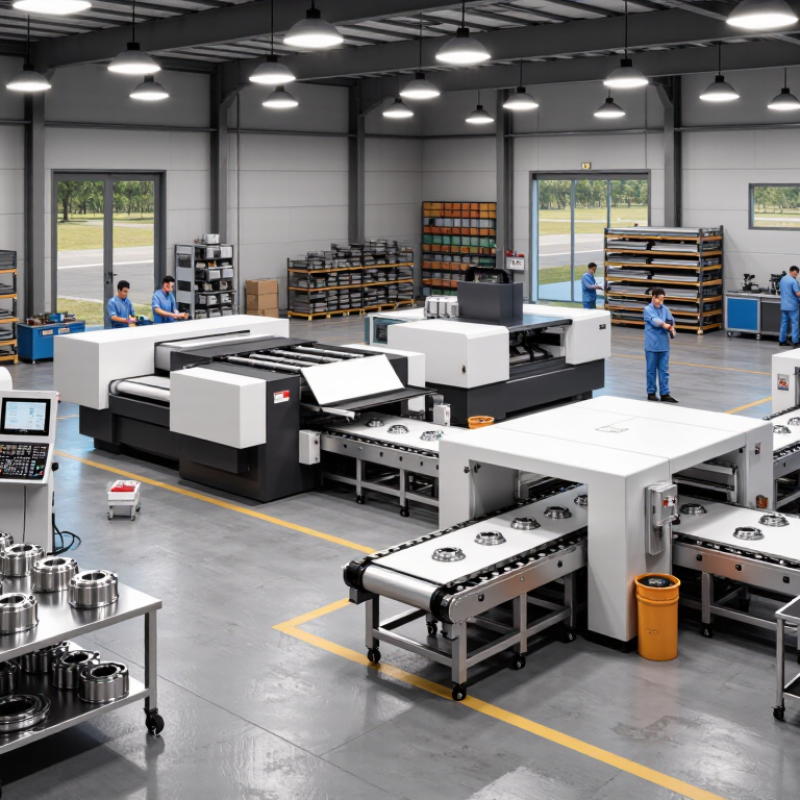
Printing machining refers to the precision manufacture of parts used in printing presses and finishing equipment. These include rollers, shafts, gears, guide rails, and mounting plates. CNC turning and milling shape many components, while grinding can refine surfaces that must rotate smoothly. Small errors matter. A slightly uneven roller may cause inconsistent pressure, visible streaks, or paper tracking problems.
In China, printing-machinery production draws on a broad network of machining, material, heat-treatment, and inspection capabilities. This can help manufacturers coordinate parts, but location alone does not guarantee quality. Buyers and engineers should compare drawings, materials, tolerances, and inspection records. For rotating parts, runout and concentricity are especially relevant; for frames and plates, flatness and hole position may matter more. Requirements depend on the press design and operating conditions.
A useful evaluation starts with the part’s job, not its name. Ask how it meets neighboring components, what loads or speeds it faces, and which surfaces need finishing. A polished roller may look impressive, yet surface finish alone cannot confirm dimensional accuracy or long-term performance. Clear specifications reduce guesswork. Even then, some design choices may need revision after assembly or production testing. That uncertainty deserves honest discussion.
China Top 10 Printing Machining Manufacturers
Criteria for Evaluating China’s Printing Machining Manufacturers
Selecting a printing machinery manufacturer takes more than comparing quoted prices. Smithers’ The Future of Global Print to 2027 estimated the global print market at $818 billion in 2022, with a forecast of $874 billion by 2027. This measures print output, not machinery sales, but it signals the scale and variety of production needs manufacturers must serve.
Ask for a live test using your paper, board, or film—not a showroom sample. Check registration consistency, setup waste, running speed, and performance after several hours. A 10,000-sheet trial can reveal issues a short demonstration misses. Inspect machining quality, calibration records, and how the factory tracks components. Small details matter: uneven roller pressure or slow plate changes can disrupt a full shift.
Service deserves equal scrutiny. Request typical spare-part lead times, technician response times, and clear warranty terms. Compare total operating costs, including energy, consumables, and routine maintenance. A low purchase price can become expensive. No checklist is perfect; factory visits and test conditions may not reflect daily production, so ask for customer references and verify claims independently.
Use these ten criteria to compare printing-machining suppliers. Request current records, sample parts, and written process details to verify each supplier’s claims before making a selection.
| No. | Evaluation Criterion | Suggested Weight | Evidence to Request | What to Check |
|---|---|---|---|---|
| 1 | Printing and Machining Process Capability | 15% | Equipment list, process flow, representative sample parts, and capability data for the requested job. | Confirm that the supplier’s actual processes and equipment match the required substrate, print method, machining operations, and production volume. |
| 2 | Quality Management System | 15% | Current quality-system certificate, certificate scope, inspection procedures, and corrective-action records. | Verify certificate validity and scope with the issuing certification body. Check whether inspection and nonconformance procedures are documented and used. |
| 3 | Dimensional and Print Inspection | 12% | Inspection plans, measurement-equipment records, sample inspection reports, and agreed acceptance criteria. | Check how critical dimensions, print position, color, surface finish, and other drawing or artwork requirements are measured and recorded. |
| 4 | Material Traceability | 10% | Material specifications, supplier certificates where applicable, lot records, and sample traceability documentation. | Confirm that materials can be linked to production lots and that material substitutions require approval. |
| 5 | Production Capacity and Lead-Time Control | 10% | Capacity plan, production schedule, stated lead times, and records from comparable orders. | Assess whether the quoted schedule accounts for tooling, setup, production, inspection, and shipment, and whether capacity is available for repeat orders. |
| 6 | Sampling, Tooling, and Change Control | 9% | Sample approval process, tooling ownership terms, revision records, and procedures for engineering changes. | Confirm that production follows approved drawings and samples and that changes are documented and authorized before implementation. |
| 7 | Process Consistency and Defect Prevention | 9% | Work instructions, in-process checks, defect records, and examples of corrective or preventive actions. | Look for defined process controls and evidence that recurring defects are investigated and addressed, rather than only detected at final inspection. |
| 8 | Communication and Technical Support | 7% | Documented inquiry responses, technical clarifications, escalation contacts, and project communication plan. | Evaluate whether the supplier can clearly confirm specifications, identify missing information, and communicate schedule or quality risks promptly. |
| 9 | Packaging and Export Readiness | 7% | Packaging proposal, product-protection details, shipping documents, and applicable export-process information. | Check whether packaging protects the parts in transit and whether shipment documentation and delivery terms are clearly agreed. |
| 10 | Commercial Transparency and Risk Management | 6% | Itemized quotation, payment terms, warranty or remedy terms, and documented supply-continuity arrangements. | Compare the stated scope, exclusions, tooling charges, minimum order quantities, and remedies for nonconforming or delayed deliveries. |
| Total Suggested Weight | 100% | Use the same scoring method and evidence requirements for every supplier being evaluated. | ||
The percentages are suggested evaluation weights, not an industry-wide standard or a ranking of specific manufacturers. Adjust them to reflect the product’s technical, regulatory, and delivery requirements.
China’s leading printing machinery manufacturers rely on precision machining to keep presses stable at production speed. CNC milling and turning shape press frames, shafts, bearing seats, and roller housings. Grinding brings critical surfaces to a consistent finish. Small deviations matter: a poorly aligned roller can cause uneven ink transfer or visible registration drift across a sheet.
Many suppliers also offer engineering support, from reviewing drawings and selecting materials to making prototypes and production parts. Coordinate measuring machines and gauges help verify dimensions, while runout checks assess rotating components. Some workshops provide dynamic balancing for rollers and cylinders, plus surface treatments to resist wear and corrosion. Ask how inspection results are recorded; a certificate is useful, but clear measurement methods matter more.
The right service depends on the press design, substrate, and expected workload. A manufacturer may recommend tighter tolerances for high-speed assemblies, but tighter is not automatically better. It can raise cost without improving print quality. Trade-offs are real. Lead times, batch size, and spare-part availability also deserve attention. Capabilities vary between factories, and specifications should be confirmed before production begins. A practical supplier explains both what it can machine and where its limits are.
A process-level comparison of major printing technologies—not a ranking or company-specific survey.
A value of 1 means the process typically uses a dedicated physical image carrier, such as a plate, screen, or engraved cylinder. Digital inkjet and toner printing typically do not require one for each job.
Profiles of China’s Top 10 Printing Machining Manufacturers
These ten profiles compare manufacturing strengths rather than treating “top” as a verified ranking. The group spans sheet-fed presses, flexographic lines, digital systems, and post-press equipment. Some factories focus on high-speed production; others build compact machines for shorter runs. Look closely at registration accuracy, changeover time, and service access. A clean sample sheet is useful, but it cannot show long-term consistency.
Smithers’ report, The Future of Global Printing to 2028, estimated the global print market at about US$834 billion in 2023, with modest growth forecast through 2028. That figure describes print output, not machinery sales. Still, it helps explain why efficiency and waste control matter. A practical profile should examine tolerances, component sourcing, testing records, and spare-part lead times. Ask for production data under comparable conditions. Details matter. Published specifications may not reveal how a machine behaves after repeated shifts; that is an uncomfortable gap, and one worth checking during evaluation.
Across China’s printing machinery sector, buyers are seeing more automation, digital controls, and energy-saving options. These features can improve consistency, but they do not guarantee better output. A machine still needs to match the job: packaging, labels, or commercial print work each place different demands on speed, color control, and setup time. Ask how a proposed model performs with your actual materials, not only with a polished demonstration sample. Details matter.
When comparing manufacturers, check production capacity, quality procedures, and access to replacement parts. Request inspection records and a clear description of testing before shipment. If possible, review a sample run using your paper or substrate, then examine registration, drying, and waste levels. Ask who handles installation and how quickly technical support usually responds. A low purchase price may lose its appeal if routine parts take weeks to arrive.
Supplier evaluations should also include communication and customization limits. Confirm specifications, delivery milestones, training, and warranty terms in writing. A capable manufacturer should explain what its machine cannot do, not just list features. Visit a factory when practical, and observe assembly areas and test procedures rather than relying on a showroom tour. No checklist is perfect. I would still leave room for judgment: factory conditions can change, and one successful test does not predict every production shift.
It makes rollers, shafts, gears, guide rails, and mounting plates for presses and finishing equipment. These parts guide, rotate, or support paper.
An uneven roller can create streaks, uneven pressure, or paper-tracking problems. A small alignment error may shift registration across a printed sheet.
Check runout and concentricity on rollers and shafts. Surface finish matters too, but a polished surface proves little by itself.
Compare drawings, materials, tolerances, and inspection records. Confirm how the part connects to neighboring components and what loads or speeds it faces.
They may use coordinate measuring machines, gauges, and runout checks. Ask about the measurement method, not only the certificate. Details matter.
No. Tighter tolerances can raise costs without improving print quality. The right limits depend on the press design and operating conditions.
Some offer drawing reviews, material selection, prototypes, grinding, surface treatments, and dynamic balancing. Capabilities vary, so confirm each service directly.
No. A roller can look smooth but still be out of round or poorly aligned. I once treated shine as proof of quality. That was too simple.
Some design choices may need revision after assembly or production testing. Record what changed, even if the original drawing seemed clear. Uncertainty happens.
This article explores the role of Printing Machining in China’s manufacturing landscape, explaining how precision processes support the production of printed components and related products. It outlines practical criteria for assessing manufacturers, including machining accuracy, production capacity, quality control, technical expertise, customization options, delivery reliability, and customer support.
The article also examines the technologies and services commonly offered by leading manufacturers, then presents profiles of ten companies to illustrate the range of capabilities available across the industry. Finally, it reviews emerging trends such as automation, digital production, and increasingly efficient manufacturing practices. These insights help readers compare potential suppliers, understand their strengths, and choose a manufacturer that fits their product requirements, budget, quality expectations, and long-term business goals.
