
China Top 10 3D Metal Printing Companies?

Time:2026-10-28 Author:Mason
0%

China’s 3D Metal Printing sector spans service bureaus, equipment manufacturers, and specialist materials suppliers. This guide introduces ten companies and considers what buyers should compare: alloy options, build volume, process capability, inspection, and delivery support. A polished machine specification is only part of the story. The finished part matters.

Terry Wohlers, an additive-manufacturing analyst, has consistently stressed that successful adoption depends on matching the technology to the application. In practical terms: “Choose the process for the part, not the hype.” This wording summarizes his widely discussed perspective; it is not presented as a verbatim quotation. That distinction matters.

For metal components, useful details include the alloy, surface finish, dimensional tolerances, and any post-processing required. A titanium bracket and a stainless-steel tooling insert do not ask the same questions of a supplier. Nor does a large build envelope guarantee repeatable quality. Ask for relevant case studies, material documentation, and clear inspection procedures. Then compare like with like.

This overview is a starting point, not a certification of every provider. Capabilities can change, and advertised specifications may not reflect a particular part’s production needs. Some claims deserve a closer look. The companies listed should therefore be assessed against your own geometry, volume, budget, and quality requirements. The right partner is the one that can explain its process plainly—and show evidence for the details that matter.
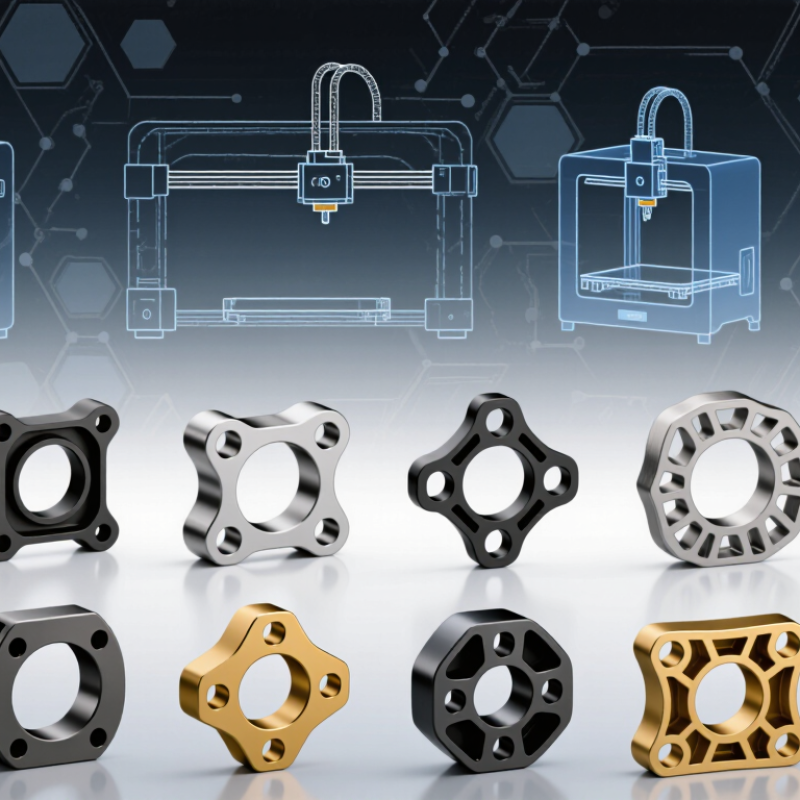
China Top 10 3D Metal Printing Companies?

How Metal 3D Printing Is Used Across China’s Manufacturing Sector

Metal 3D printing is finding practical roles across China’s manufacturing sector, especially where parts are complex, lightweight, or needed in small batches. The Wohlers Report 2024 estimates that global additive manufacturing revenues reached about US$20.0 billion in 2023, an 11.1% increase year over year. This figure covers the wider industry, not metal printing alone, but it shows expanding investment in production-ready applications. That matters.

In aerospace and energy, laser powder bed fusion can create internal cooling channels and compact components that are difficult to machine from solid metal. Automotive manufacturers use metal printing for prototypes, lightweight parts, and customized production tooling; it is less suited to every high-volume component. Medical manufacturers also use it for patient-specific implants, where controlled surfaces and careful finishing matter. The printer is only one step. Heat treatment, support removal, machining, and inspection can add time and cost, so a complex shape is not automatically a better part.

China’s broad manufacturing base offers potential users access to engineering, materials, and downstream processing capabilities. Yet qualification remains demanding, especially when a component faces heat, vibration, or repeated loading. Powder consistency and build orientation can affect final performance. These details are easy to underestimate. Metal printing is most useful when teams compare the full production route against conventional methods, rather than choosing it for novelty alone.

Criteria for Identifying China’s Leading Metal 3D Printing Companies

A credible ranking of China’s leading metal 3D printing companies should begin with verifiable capability, not promotional claims. Compare the processes each provider supports, such as powder-bed fusion or directed energy deposition, and check which alloys they can handle. Ask for sample inspection reports showing density, dimensional accuracy, and repeatability. A polished sample is useful, but batch consistency matters more.

Look for evidence that matches your application. A supplier serving aerospace parts may not be the right fit for a small medical component or a custom industrial bracket. Review machine capacity, build size, post-processing options, quality-control procedures, and technical support. Certifications can help, but confirm their scope and validity. No scorecard is perfect. Public data may be incomplete, and advertised tolerances can depend on part geometry.

Tips: Request a recent sample report and clarify how measurements were taken. Share a simple test part before committing to a large order. Compare lead times and communication, too. Small details matter. A clear answer about surface finishing is often more useful than a broad promise of precision.

China Top 10 3D Metal Printing Companies? – Criteria for Identifying China’s Leading Metal 3D Printing Companies

Use these weighted criteria to assess metal additive manufacturing providers in China. The table is an evaluation framework, not a verified ranking of specific companies; compare providers using consistent, documented evidence.

No. Evaluation Criterion Weight What to Assess Evidence to Request
1 Metal AM Process Capability 15% Relevant metal processes, such as powder bed fusion or directed energy deposition; supported alloys; build-envelope suitability; and ability to meet the part’s geometry and application requirements. Machine and process specifications, material-and-process lists, representative build records, and confirmation that the proposed process is suitable for the part.
2 Quality Management and Process Control 15% Documented procedures for production control, material traceability, equipment maintenance, nonconformance handling, and corrective actions. Check the scope and validity of any claimed certification. Current certificates where applicable, quality procedures, sample inspection plans, nonconformance records, and traceability documentation.
3 Material Qualification and Traceability 12% Control of powder or feedstock identity, storage, handling, reuse, and lot history; documented material properties for the specific process and build conditions. Material certificates, batch records, powder-handling procedures, reuse policies, and test reports linked to the relevant build.
4 Inspection and Testing Capability 12% Ability to inspect dimensions and surface condition and, when required, arrange mechanical testing or non-destructive testing. Confirm that methods match the part’s acceptance requirements. Inspection reports, calibrated-equipment records, test methods, sample certificates of conformity, and details of any external testing arrangements.
5 Post-Processing Integration 10% Availability and control of relevant finishing steps, such as heat treatment, support removal, machining, surface finishing, or hot isostatic pressing where specified. Process flow, supplier responsibilities, work instructions, and records showing how post-processing is connected to the part’s traceability and inspection plan.
6 Application Experience and Technical Support 10% Demonstrated experience with comparable materials, geometries, tolerances, and end-use requirements, plus engineering support for design-for-additive-manufacturing and process planning. Non-confidential case studies, anonymized part examples, engineering review records, and references that can be verified with permission.
7 Production Capacity and Delivery Reliability 8% Realistic capacity for the required machine, material, build schedule, and order volume. Assess planning, lead-time communication, and contingency arrangements. Capacity statement, proposed production schedule, recent on-time delivery metrics with a stated measurement period, and documented contingency plans.
8 Data Security and Intellectual Property Controls 7% Controls for protecting CAD files, technical drawings, build parameters, and confidential project information throughout quotation, production, and file retention. Confidentiality terms, access-control procedures, file-transfer practices, retention and deletion policies, and incident-response procedures.
9 Cost Transparency and Total Cost 6% Clarity of pricing assumptions for materials, machine time, setup, post-processing, inspection, packaging, and revisions. Compare total delivered cost rather than unit price alone. Itemized quotation, stated exclusions, payment terms, change-order policy, and a clear definition of included inspection and documentation.
10 Export, Compliance, and After-Sales Support 5% Ability to support the destination market’s applicable documentation, shipping, and regulatory requirements, together with clear handling of technical questions and quality issues. Export documentation capability, packaging and logistics plan, applicable compliance records, warranty terms, and escalation contacts.
Total Evaluation Weight 100% Score each criterion using the same evidence standard for every provider.

Scoring note: Assign a consistent score to each criterion, multiply it by its weight, and retain the supporting evidence. Certification, process capability, and regulatory requirements should be verified for the relevant facility, material, process, and intended application.

Profiles of 10 Notable Metal 3D Printing Companies in China

China’s metal additive-manufacturing sector is best viewed through capabilities, not a simple league table. Wohlers Associates’ 2024 report estimated global additive-manufacturing revenue at US$20.0 billion in 2023, up 11.1% year on year. The figure covers the wider industry, not China’s metal segment alone. That distinction matters.

Ten useful company profiles show the range. One develops laser powder-bed-fusion machines for intricate channels. Another builds large-format systems for industrial components. A third specializes in electron-beam processing. A fourth targets batch production with binder jetting. A fifth supplies titanium alloy powders. A sixth focuses on powder atomization and consistency. A seventh develops process-monitoring software. An eighth offers contract printing and post-processing. A ninth makes metal components for medical applications. A tenth serves factories needing custom tooling or replacement parts. These are capability profiles, not a verified ranking.

For buyers, inspect more than machine specifications. Ask for build examples, alloy traceability, surface-finish data, and repeatability results. A polished sample is not enough. Request records from multiple production runs, plus details on heat treatment and inspection. Public company disclosures vary, so comparisons can be uneven. That remains a real limitation.

Technologies, Materials, and Industries Served by These Companies

A practical review of China’s leading metal-printing companies should compare processes, materials, and end-use experience—not machine counts alone. Laser powder bed fusion suits intricate parts, such as thin-walled turbine components and medical implants. Directed energy deposition can repair or build larger parts, while binder jetting supports batch production. Fit matters.

Common materials include stainless steel, titanium alloys, nickel-based superalloys, and aluminum alloys. Their performance depends on powder quality, process control, and post-processing. A company’s published material list is not enough; buyers should check sample parts, inspection methods, and repeatability data. Details vary.

Wohlers Report 2024 valued the entire additive manufacturing industry at $20.035 billion in 2023, up 11.1% year over year. That figure covers more than metal printing, so it should not be read as the metal market’s size. The report signals wider adoption, not equal readiness across sectors. Aerospace and energy buyers may prioritize traceability and fatigue testing; automotive firms may focus on throughput and cost. Dental and medical applications need close control of surface finish and dimensions. One weakness in many comparisons is limited public data on real production yields. Ask each supplier for application-specific evidence, not just demonstration parts.

How to Compare Chinese Metal 3D Printing Providers for Your Needs

When reviewing a shortlist of Chinese metal 3D printing providers, compare them against your part, not just their machine count. Ask which alloys they process, such as titanium or stainless steel, and whether the required powder-bed process suits your geometry. A thin lattice and a thick mounting bracket may need different build settings. Details matter.

Request a sample report showing dimensions, surface finish, and inspection methods. For a trial part, check a critical hole with your own gauge and inspect rough internal channels. Ask how powder lots, build records, and post-processing steps are documented. A polished brochure can still leave practical questions unanswered. That is worth noticing.

Compare quotes line by line: material, setup, heat treatment, machining, inspection, packaging, and delivery time. Confirm the build envelope and tolerances for your actual drawing; do not assume a stated capability applies to every feature. Ask who handles design changes and how quickly they respond. A low quote may omit finishing or testing, while a detailed quote can make trade-offs clearer. If possible, order a small paid sample before committing to a larger batch. Keep notes on response quality, too. It is not a perfect measure, but it often reveals how smoothly technical issues may be resolved.

China Metal 3D Printing Providers: Compare Typical Process Layer Thickness

Use process capability as one practical starting point when comparing providers. The chart shows indicative layer-thickness ranges for common metal additive manufacturing processes—not rankings or company-specific specifications.

Ranges are approximate and vary by machine, material, and parameter settings. Ask each provider to confirm the specifications for your alloy and application, and compare them alongside tolerances, material options, post-processing, quality controls, lead time, and cost.

FAQS

Where is metal 3D printing useful in China?

It can suit complex, lightweight parts and small batches. Aerospace, energy, automotive, and medical manufacturers use it for different needs.

What can laser powder bed fusion produce?

It can form internal cooling channels and compact components that are difficult to machine from solid metal. Post-processing still matters.

Is metal printing right for high-volume production?

Not always. It is used for prototypes, lightweight parts, and customized tooling, but conventional methods may suit some high-volume components better.

What happens after a part leaves the printer?

Heat treatment, support removal, machining, and inspection may follow. These steps add time and cost.

What can affect a printed part’s performance?

Powder consistency and build orientation can affect the final result. Heat, vibration, and repeated loading also make qualification demanding.

How should a manufacturer assess a service provider?

Check supported processes, alloys, machine capacity, build size, post-processing, quality controls, and technical support. A broad promise is not enough.

What evidence should buyers request?

Ask for a recent inspection report showing density, dimensional accuracy, and repeatability. Clarify how measurements were taken.

Does a polished sample prove consistent production?

No. A polished sample can look convincing, but batch consistency matters more. Test a simple part first.

Is a complex shape automatically a better choice?

No. Compare the full production route with conventional methods, including finishing and inspection. I might still overrate the shape. It is worth checking.

Conclusion

This article explores how 3d Metal Printing supports China’s manufacturing sector, from rapid prototyping and customized components to small-batch production and complex industrial parts. It outlines the criteria used to identify leading providers, including production capabilities, technical expertise, quality control, material options, and customer support. Ten notable companies are profiled by their general strengths and areas of application, without treating any single provider as the right choice for every project.

The article also compares the technologies and metals commonly used in the field, such as powder-bed processes and alloys suited to demanding engineering applications. It describes how these services support industries including aerospace, automotive, medical devices, energy, and industrial equipment. To help readers select a suitable provider, it offers practical considerations such as part requirements, material performance, delivery schedules, certification needs, and total project cost.

Mason

Mason

Mason is a seasoned marketing professional with a deep expertise in the company's offerings and a passion for driving brand awareness. With a strong background in digital marketing strategies, he has an innate ability to connect with diverse audiences and effectively communicate product benefits.......