
How to Choose the Best Metal 3D Printing Service?

Time:2026-10-28 Author:Oliver
0%

Choosing a metal 3D printing service is not just a search for the lowest quote. The right partner must match your part’s function, material needs, production volume, and delivery schedule. Metal Printing can produce intricate channels, lightweight structures, and consolidated assemblies, but these advantages depend on careful design and process control. A stainless-steel bracket, for example, may need different strength, surface finish, and inspection checks than a heat-resistant aerospace component. The details matter.

Compare providers by asking which processes and alloys they offer, what part dimensions they can build, and how they verify quality. Request information about tolerances, surface finishing, heat treatment, material traceability, and inspection reports. A polished sample can look impressive, yet tell you little about internal defects or repeatability. Ask for evidence. Review relevant case studies, certifications, and the provider’s experience with parts similar to yours, while checking that claims are specific and verifiable.

Price should be considered alongside engineering support, lead time, and post-processing. A low initial estimate may exclude machining, support removal, or testing. Share a clear drawing and explain how the part will be used; this helps providers identify risks before production. Still, no checklist removes every uncertainty. A first build may reveal a thin wall, rough feature, or tolerance that needs reconsideration. Choose a service that communicates these trade-offs plainly, documents its recommendations, and is willing to discuss what it cannot guarantee. That is a more dependable basis for choosing than a quote alone.
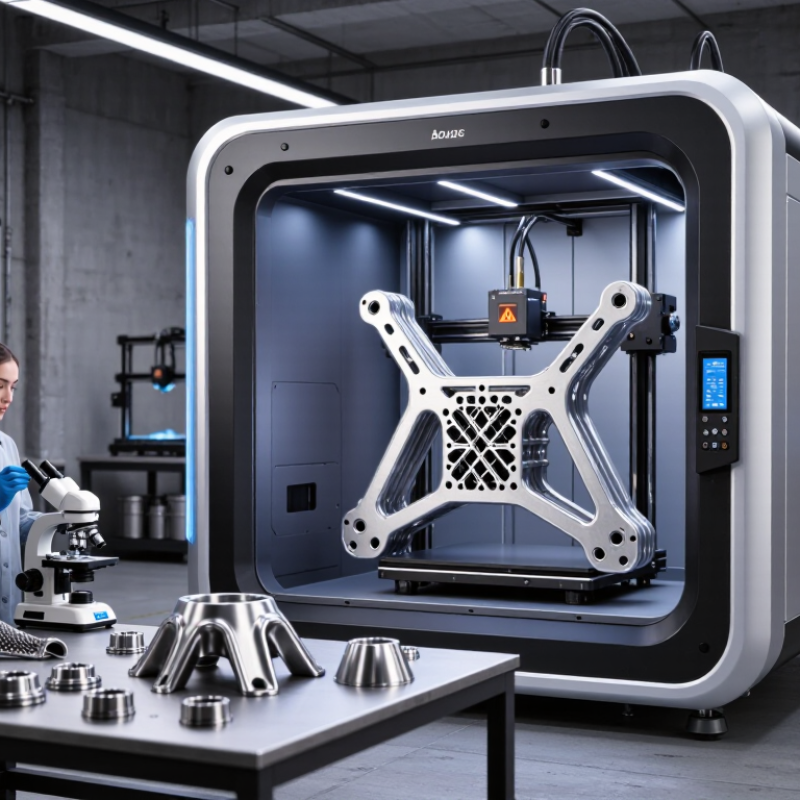
How to Choose the Best Metal 3D Printing Service?

Define Your Metal 3D Printing Requirements

Define Your Metal 3D Printing Requirements

Start with the part. State what it must do, where it will operate, and how many units you need. A bracket exposed to vibration has different needs from a lightweight, heat-resistant component. List key loads, operating temperatures, target weight, and expected service life. Include a drawing or CAD file, but flag dimensions that truly require tight tolerances. Over-specifying every surface can raise costs without improving performance.

Material choice follows function. Compare strength, corrosion resistance, heat performance, and post-processing needs—not just the alloy name. Specify whether the part needs machining, heat treatment, or a particular surface finish. Also ask how the service verifies dimensions and material properties. Wohlers Report 2024 estimates global additive manufacturing industry revenue reached $21.8 billion in 2023, up 11.1%. That growth signals a broader market, not identical capabilities across providers. Ask for evidence relevant to your geometry and production scale.

Be specific about acceptance criteria. Define critical dimensions, inspection methods, documentation, and delivery quantities before requesting a quote. A thin wall may print successfully yet distort during heat treatment. That detail is easy to miss. If requirements are still uncertain, mark assumptions clearly and invite the service provider to challenge them. One caveat: early estimates can change after design review. That is normal.

Compare Printing Technologies and Available Alloys

How to Choose the Best Metal 3D Printing Service?

Compare the printing process with the part’s job, not just its appearance. Laser powder bed fusion (LPBF) can produce fine features and dense parts, but supports, build volume, and post-processing affect the final cost. Directed energy deposition (DED) suits larger features and repairs, though its surface may need more machining. Binder jetting can build many parts efficiently; sintering can cause shrinkage, so dimensional control deserves close attention. Ask what tolerances the service can verify on parts like yours.

Alloy choice changes with the process. Stainless steel offers corrosion resistance for many industrial parts, while aluminum keeps weight down in suitable applications. Titanium can combine low mass with high strength, but machining and powder handling add cost. Nickel alloys tolerate demanding heat, yet may require slower, careful finishing. Not every service offers every alloy. Request the exact alloy specification, heat-treatment options, inspection records, and data from test coupons. A glossy sample is not proof of consistent quality; that shortcut is tempting, but incomplete. One useful question: can they show measurements from a comparable build, not merely a polished showcase piece?

How to Choose the Best Metal 3D Printing Service? - Compare Printing Technologies and Available Alloys

Technology How It Works Common Alloys Strengths Trade-Offs Often Suited To
Laser powder bed fusion (PBF-LB/M) A laser selectively melts metal powder in successive layers. Parts commonly require support removal and may receive heat treatment or machining. Titanium alloys (such as Ti-6Al-4V), stainless steels (such as 316L), aluminum alloys (such as AlSi10Mg), nickel-based superalloys, and cobalt-chrome. Detailed features, complex internal passages, and generally high-density parts; broad availability across multiple alloy families. Supports can affect design and removal; residual stress, surface roughness, and build orientation may require consideration. Build size is machine-dependent. Complex, high-performance components, including lightweight structures and parts with internal channels.
Electron beam powder bed fusion (PBF-EB/M) An electron beam melts powder in a vacuum. The powder bed is typically preheated during the build. Titanium alloys (including Ti-6Al-4V), commercially pure titanium, and selected nickel-based alloys, depending on the service provider and machine. The heated build environment can reduce thermal gradients and residual stress. It is well established for titanium components. Typically has a rougher surface and coarser feature capability than laser powder bed fusion; material selection and fine-detail capability can be more limited. Titanium parts where material performance is important and the design can accommodate the process’s surface and feature characteristics.
Metal binder jetting A liquid binder joins powder particles layer by layer. The printed “green” part is then cured, debound, and sintered; some material systems may use infiltration. Stainless steels (including 316L and 17-4 PH), tool steels, and selected other alloys, depending on the qualified material system. No laser or electron beam is used to melt the powder during printing; supports are often unnecessary, and the process can be suitable for batch production. Sintering causes shrinkage that must be managed and compensated for. Density, dimensional accuracy, and properties depend on the material and post-processing route. Production runs of relatively small or medium-sized parts when the service provider can control sintering and dimensional requirements.
Directed energy deposition (DED) Focused thermal energy melts wire or powder as it is fed into a deposition zone, building material onto a substrate or existing component. Stainless steels, titanium alloys, nickel-based alloys, cobalt-based alloys, and selected aluminum alloys; available feedstock depends on the equipment and process. Effective for large features, adding material to existing parts, and repair or restoration applications; wire-fed systems can use high material-deposition rates. As-built surfaces and fine details are generally less precise than powder bed processes, so machining is often needed. Heat input and deposition strategy affect distortion and properties. Large components, near-net-shape builds, cladding, and repair of high-value metal parts.

Alloy availability, achievable properties, tolerances, and post-processing vary by equipment and service provider. Confirm the exact alloy specification, heat-treatment condition, inspection requirements, and finishing allowance before ordering.

Evaluate Service Providers and Their Capabilities

How to Choose the Best Metal 3D Printing Service?

Evaluate Service Providers and Their Capabilities

Choosing a metal 3D printing service means checking more than machine size or quoted price. The 2024 Wohlers Report estimated global additive manufacturing industry revenue at $20.0 billion in 2023, reflecting a growing field. That figure does not guarantee consistent part quality. Ask providers which alloys, build processes, and part dimensions they can support. Then confirm their experience with parts resembling yours.

Review how each provider controls the full production route. Ask for material certificates, build records, heat-treatment details, and inspection results. Check whether they offer machining and non-destructive testing when your design requires them. A useful conversation gets specific: What happens if a build fails? How are powder batches tracked? Can they show sample reports with sensitive details removed? Compare answers, not just polished capability sheets. Some details may remain unclear until a trial build; that is worth acknowledging.

Tips: Share a representative part file and request a written review of risks, tolerances, and post-processing. Compare the same requirements across providers. One small test build can reveal more than a confident sales call.

Review Quality Standards, Costs, and Lead Times

A metal 3D printing service should explain how it verifies quality, not just promise accurate parts. Ask which process and alloy it will use, and request a sample inspection report. Useful records may include powder-batch traceability, build parameters, heat-treatment details, and measured dimensions. ISO/ASTM 52900 helps standardize additive manufacturing terms, but it does not set your part’s acceptance limits. Agree on critical dimensions, surface finish, and test requirements before production. Small details matter.

Compare quotes line by line. The print itself may not include support removal, machining, heat treatment, surface finishing, inspection, or shipping. These steps can change both price and part performance. Ask whether the quote covers material certification and dimensional reports, especially for features that must fit another component. A lower price is not automatically a poor choice; a higher one is not proof of better quality. That uncertainty deserves a direct conversation.

Lead time should include more than machine hours. Design review, build scheduling, cooling, post-processing, and inspection all take time. Request separate estimates for printing and finishing, plus a realistic delivery window. If your design is not final, ask how revisions affect the schedule and cost. One imperfect habit is comparing dates before comparing scope. A clear timeline might name each stage and flag any outsourced step that could add days.

Check Finishing Options and Customer Support

When comparing metal 3D printing services, look beyond the machine and ask how each part will be finished. Options may include support removal, bead blasting, heat treatment, machining, and polishing. The right combination depends on the alloy, geometry, and intended use. Ask for the expected surface roughness and critical dimensions, not just “smooth” or “high precision.” Details matter.

A sample part helps, but inspect its hidden edges, holes, and contact surfaces too. A polished surface can conceal uneven dimensions. Request inspection records and ask how the provider handles parts that miss agreed tolerances. Wohlers Report 2024 estimates the global additive manufacturing industry reached $20.035 billion in 2023, up 11.1% from 2022. That growth reflects a broad industry; it does not guarantee consistent finishing from any one service.

Customer support should be specific and reachable. Ask who reviews your file, when engineering feedback arrives, and whether you will hear about risks before production. Clear answers on lead times, finishing limits, and corrective steps are useful signs. Ask directly. A vague reply may be a warning, though even a good supplier can overlook a detail. Share your drawings, surface requirements, and inspection priorities in writing before approving the build.

FAQS

What capabilities should I check before choosing a metal 3D printing service?

Confirm its supported alloys, build processes, and maximum part dimensions. Ask about similar parts it has made. A polished capability sheet is not proof.

Which production records should I request?

Ask for material certificates, build records, heat-treatment details, and inspection results. Check how powder batches are tracked. Request a sample report with sensitive details removed.

Do quality standards define whether my part is acceptable?

Standards can help providers use consistent terms, but they do not set your part’s acceptance limits. Agree on critical dimensions, surface finish, and tests. Small details matter.

How can I compare quotes fairly?

Check whether each price includes support removal, machining, heat treatment, finishing, inspection, and shipping. A lower quote is not automatically worse. Ask what is missing.

What should a realistic lead-time estimate include?

Ask for separate estimates for printing and finishing. The schedule should also account for design review, build scheduling, cooling, and inspection. Outsourced steps may add days.

What questions can reveal how a provider handles problems?

Ask what happens if a build fails and how the cause is documented. Request clear answers, not only assurances. Some risks stay unclear until a trial.

Is a sample build worth the extra time and cost?

A small test build can reveal fit, finish, and process issues. Share a representative part file and request a written risk review. Try one test build.

What if my design changes after the quote?

Ask how revisions affect price and delivery dates before production begins. Compare providers using the same requirements. I might still miss a hidden cost; check the scope again.

Conclusion

Choosing the best metal 3D printing service starts with a clear understanding of your project. Define the part’s purpose, size, strength requirements, operating conditions, and desired quantity. These details will help you identify suitable printing technologies and alloys, since each option offers different advantages in terms of material properties, design flexibility, and production needs.

Next, assess providers by reviewing their equipment, technical expertise, quality standards, and ability to meet your budget and schedule. Ask about inspection procedures, finishing options, and the support available during design and production. A dependable Metal Printing service should communicate clearly, explain relevant trade-offs, and provide a practical plan from initial requirements through final delivery. Comparing these factors helps you select a service that can produce parts suited to your application with consistent quality and realistic lead times.

Oliver

Oliver

Oliver is a seasoned marketing professional with a wealth of expertise in driving brand awareness and engagement. With a deep understanding of our company's product offerings, he consistently delivers high-quality content that enriches our professional blog. His insights not only shed light on......